
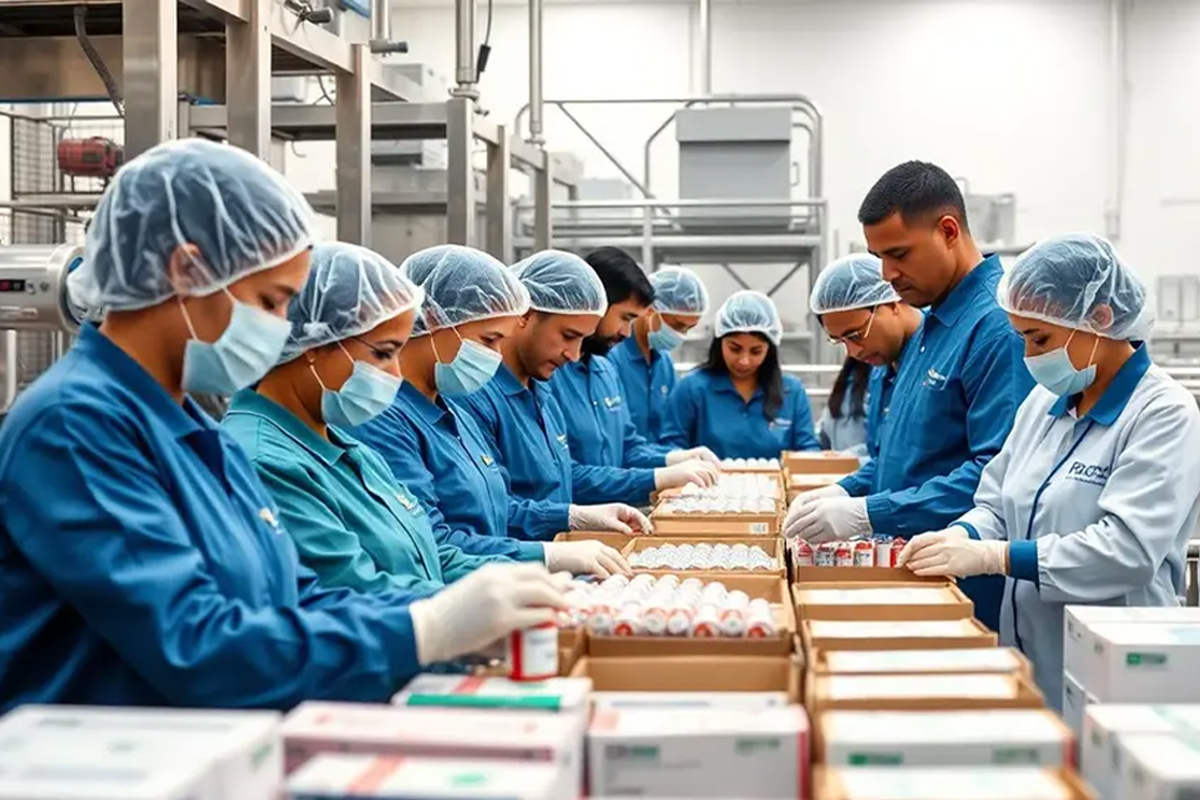
Reinventing Materials: The Shift to Circularity
The Rise of Mono-Materials and Advanced Films
For decades, the standard for protecting sensitive medication has relied on complex, multi-layered films. These traditional structures often laminate distinct types of plastics with aluminum foil to create an impenetrable fortress against moisture, oxygen, and light. While effective for preservation, these composite materials are a nightmare for recycling facilities because separating the layers is technically difficult and economically unviable. Consequently, a vast majority of blister packs and sachets end up in landfills. The industry is now witnessing a pivot toward "mono-material" solutions—packaging constructed from a single polymer type that retains high-barrier properties while remaining fully recyclable within existing waste streams.
This transition, however, is not without its engineering challenges. The primary hurdle lies in maintaining the absolute sterility required for medical products. When manufacturers switch to recycled or bio-based mono-materials for primary packaging (the layer in direct contact with the medicine), they must ensure the material can withstand rigorous sterilization processes, such as gamma irradiation or ethylene oxide gas, without degrading or leaching chemicals. Recent breakthroughs have led to the development of transparent, vapor-deposited films that offer the necessary protective barriers while allowing consumers to see the product. These advanced materials represent a critical balance, ensuring that the drive for environmental stewardship does not compromise patient safety or medicine efficacy.
Harnessing Agricultural Byproducts for Bioplastics
Beyond merely recycling existing plastics, there is a burgeoning movement to decouple packaging from fossil fuels entirely by turning to the farm. Agricultural waste, which was once burned or discarded, is finding new life as a feedstock for high-performance biopolymers. Innovative extraction technologies are now capable of isolating cellulose and other structural components from rice straw, corn stover, and pruning residues. These organic building blocks are then synthesized into polylactic acid (PLA) or polybutylene succinate (PBS), creating materials that are not only renewable but also capable of breaking down in industrial composting facilities.
This "farm-to-pharma" approach offers functional benefits that go beyond biodegradability. For instance, researchers are successfully extracting lignin—a natural polymer found in plant cell walls—to utilize its inherent properties. Lignin acts as a natural antioxidant and antimicrobial agent. When incorporated into packaging films, it can theoretically extend the shelf life of pharmaceutical products by preventing oxidation and microbial growth, reducing the need for synthetic preservatives. Furthermore, starch-based polymers derived from crops like cassava are being engineered to provide the flexibility needed for soft IV bags and tubing. By validating these materials against medical-grade standards, the sector is proving that plant-based solutions can perform just as robustly as their petroleum-based predecessors.
| Feature | Traditional Petroleum-Based Plastics | Next-Gen Bio-Based Polymers |
|---|---|---|
| Source Material | Fossil fuels (finite resource) | Agricultural waste, starch, cellulose (renewable) |
| End-of-Life | Persists for centuries; difficult to recycle if layered | Industrial compostable or chemically recyclable |
| Carbon Footprint | High extraction and processing emissions | Lower footprint; plants sequester carbon during growth |
| Barrier Properties | Excellent (standard benchmark) | Rapidly improving; comparable in advanced grades |
| Cost Stability | Fluctuates with oil prices | Dependent on agricultural yields and processing scale |
Overcoming Manufacturing Hurdles
Solving the "Sticky" Situation with Natural Additives
Adopting green materials is rarely a "drop-in" solution for existing manufacturing lines. One of the many persistent technical issues encountered when switching to bio-based films or recycled resins is "blocking." This phenomenon occurs when the film layers stick together due to high tackiness, causing jams in high-speed packaging machinery. In traditional plastics, synthetic mineral additives are used to roughen the surface microscopically, allowing layers to slide past one another. However, adding synthetic minerals to a bio-based film can compromise its compostability and contaminate the recycling stream, defeating the purpose of the switch.
To resolve this, chemical engineers have developed a new class of organic anti-blocking agents derived from natural sources. These additives mimic the function of their synthetic counterparts but are fully biodegradable and non-toxic. By utilizing specialized plant-based particles or modified natural waxes, manufacturers can achieve the necessary "slip" required for smooth processing on automated lines without altering the clarity or strength of the final package. This development is crucial because it allows pharmaceutical companies to utilize existing infrastructure. It eliminates the need for massive capital investments in new machinery, thereby lowering the barrier to entry for adopting sustainable materials.
Intelligent Design: Smart Packaging and Traceability
Sustainability is not solely about the material itself; it is also about efficiency and information. The concept of "smart packaging" is revolutionizing how medicines move through the supply chain and how consumers interact with them. By embedding Near Field Communication (NFC) chips or dynamic QR codes into the packaging design, manufacturers can achieve granular visibility into inventory levels. This real-time data helps prevent overproduction and reduces the expiration of unused stock, directly addressing the massive issue of pharmaceutical waste. A more efficient supply chain means fewer trucks on the road and less energy consumed in warehousing.
Moreover, these digital touchpoints serve a vital educational role for the American consumer. Often, the hesitation to recycle stems from confusion—people simply do not know if a blister pack or a specialized bottle belongs in the blue bin. A quick scan of a smart package can instantly provide the user with localized recycling instructions, dismantling complex components, or directions to take-back programs. This transparency empowers the patient to become an active participant in the product's lifecycle. By transforming the package from a simple container into a platform for communication, companies can drive higher recycling rates and foster a stronger sense of brand loyalty among eco-conscious demographics.
Closing the Loop: Supply Chain and Consumer Dynamics
The Invisible Heroes: Inks, Adhesives, and Coatings
When analyzing the recyclability of a medical package, the focus often lands on the bottle or the box, but the "invisible" elements—inks, coatings, and glues—can be the deciding factor in whether a package is actually recycled or sent to a landfill. Standard adhesives used to attach labels can be notoriously difficult to remove during the washing process at recycling centers. If the glue remains, it gums up the machinery or degrades the quality of the recycled plastic (rPET), rendering it useless for future high-grade applications. Similarly, metallic inks or heavy coatings can release volatile organic compounds (VOCs) and contaminate the pulp during paper recycling.
The industry is responding with a wave of "wash-off" adhesive technologies and vegetable-based inks. These advanced adhesives are designed to deactivate in the specific conditions of a recycling wash bath, allowing the label to separate cleanly from the container. This ensures that the recovered plastic is pure and high-quality, suitable for being turned back into new bottles. Furthermore, protective coatings for paperboard boxes are shifting toward water-based, biodegradable formulas that provide necessary grease and moisture resistance without using plastic laminates. These innovations ensure that the entire package, not just the main substrate, contributes to a circular economy.
Meeting the Modern Consumer's Expectation
The American consumer landscape has shifted dramatically. Today's patients approach healthcare products with the same scrutiny they apply to food and consumer goods. There is a palpable demand for transparency; users want to know not only what is in their medicine but also the environmental cost of its delivery. The era of excessive "Russian doll" packaging—where a small bottle is inside a tray, inside a box, wrapped in shrink wrap—is ending. Consumers view such excess as wasteful and irresponsible. This sentiment is driving a design philosophy centered on "right-sizing," where empty headspace is minimized, and packaging volume is optimized for logistics and storage.
This shift also influences the choice of secondary packaging materials. Molded pulp, once associated primarily with egg cartons, has been refined into a premium, smooth-finish material capable of replacing thermoformed plastic trays for holding vials and ampoules. These pulp inserts are robust, shock-absorbent, and, many importantly, obviously recognizable as recyclable paper to the consumer. By aligning the physical packaging with the values of the modern patient—safety, simplicity, and sustainability—pharmaceutical companies are finding that green design is a powerful differentiator in a crowded market.
| Factor | Compostable Solutions | Recyclable Systems | Reusable Models |
|---|---|---|---|
| Best Use Case | Single-use films, sachets, and secondary wrappers | Bottles, rigid containers, and paperboard cartons | B2B transport totes and bulk supply containers |
| Consumer Action | Requires access to industrial composting facilities | Curbside bins (widely understood by US public) | Return-to-vendor or pharmacy take-back programs |
| Primary Benefit | Reduces microplastic pollution; returns nutrients to soil | Keeps materials in the economy; reduces plastic use | Maximizes resource efficiency; eliminates single-use waste |
| Challenge | Confusion with standard plastic; requires clear labeling | Contamination from food/chemicals; fluctuating market value | Logistics of reverse supply chain and sterilization |
Q&A
-
What are sustainable pharmaceutical packaging solutions and why are they important?
Sustainable pharmaceutical packaging solutions are eco-friendly materials and designs used in the packaging of pharmaceutical products. These solutions minimize environmental impact by using recyclable, biodegradable, or reusable materials. They are important because they reduce waste, lower carbon emissions, and help pharmaceutical companies meet regulatory and consumer demands for environmentally responsible practices.
-
Who are some leading eco-friendly medicine packaging suppliers in the United States?
In the United States, several companies are leading the way in eco-friendly medicine packaging. These include companies like West Pharmaceutical Services and Amcor, which focus on innovative, sustainable packaging solutions that meet the rigorous standards of the pharmaceutical industry while reducing environmental impact.
-
What materials are considered green medical packaging materials?
Green medical packaging materials include biodegradable plastics, recycled paper, and plant-based materials like polylactic acid (PLA). These materials are chosen for their ability to decompose naturally or be recycled, thus minimizing the ecological footprint of pharmaceutical packaging.