
What an LPN Does and How LPN Training Works
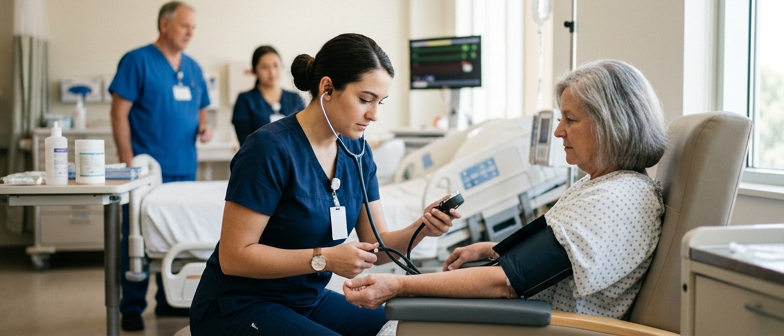
A licensed practical nurse, or LPN, provides hands-on basic nursing care under the supervision of registered nurses and physicians. In a typical day, an LPN checks vital signs, gives routine medications, changes dressings, assists with bathing and mobility, and watches for changes in a patient’s condition that need to be reported. LPNs work in hospitals, nursing homes, doctor’s offices, rehab centers, home health, and long-term care facilities, so they need clear communication skills and the ability to stay calm in busy, high-pressure settings. Because they interact closely with patients and families, they serve as an important link between the care team and the people receiving care.
To prepare for this role, a formal LPN training program teaches both nursing science and practical skills. Classroom and lab courses cover anatomy, basic pharmacology, infection control, and documentation, while an LPN program with clinical training sends students into supervised clinical rotations in real health care settings to practice injections, wound care, and patient assessment. These programs are usually offered by community colleges, vocational schools, and accredited nursing schools, and they are structured so that graduates are eligible to sit for the NCLEX-PN licensing exam. This combination of theory and supervised clinical practice helps new practical nurses move from school into entry-level nursing jobs.
Core LPN Training Requirements in the US
Across the United States, most practical nursing schools share similar LPN training eligibility requirements, even though each state board of nursing sets its own rules. Applicants are usually expected to have a high school diploma or GED, be at least 18 by the time they start clinical practice, and show basic academic readiness through transcripts, placement tests, or minimum GPAs. Schools commonly require proof of current immunizations, a recent physical exam, and CPR certification for healthcare providers so students can safely participate in patient care during training.
Beyond basic admission criteria, core LPN training requirements in many states include criminal background checks, fingerprinting, and sometimes drug screening before students can enter clinical sites. Programs may request personal references or a short statement of interest to confirm that candidates understand the emotional and physical demands of nursing. Some states or schools also expect prerequisite courses in areas such as basic biology, anatomy and physiology, or medical math to prepare students for a fast-paced practical nursing curriculum and medication-related responsibilities.
LPN training requirements in the US continue after admission, because students must complete both classroom instruction and supervised clinical hours before graduation. Accredited programs typically cover nursing fundamentals, pharmacology, gerontology, mental health, and long-term care, along with hands-on practice in settings such as hospitals or nursing homes. After meeting school and state education standards, graduates apply to their state board of nursing and must pass the NCLEX-PN licensure exam to earn an unrestricted practical or vocational nurse license.
State-by-state variations and the NCLEX-PN exam
LPN training requirements in the US share a common core, but each state board of nursing adds its own rules. All states expect you to finish an approved LPN training program and pass the NCLEX-PN, yet details like minimum clinical hours, background checks, and limits on exam retakes differ. How to become an LPN in a particular state can also involve extra coursework, fingerprinting, or specific application deadlines.
Comparing Indiana and Pennsylvania shows how steps to become an LPN can vary. Indiana focuses on verifying graduation from a state-approved program and reviewing your criminal background before authorizing the NCLEX-PN, while Pennsylvania sets detailed standards for practical nursing programs and may request more supporting documents. In every state, passing the NCLEX-PN proves you meet national practice standards, but your license is governed by state scope-of-practice, renewal rules, and any continuing education requirements.
Finding Accredited and Affordable LPN Programs
When you start looking for an LPN training program, accreditation should be your first filter. Using searches for accredited nursing programs near you helps you avoid schools that do not meet national standards or may not qualify you for licensure. Focus on practical nursing programs approved by your state board and recognized by major nursing accreditors, so your coursework and clinical hours will count for the NCLEX-PN exam and for transferring credits into an advanced nursing degree.
Cost is the next major factor, and there are ways to find affordable or even employer-sponsored LPN training options in your area. Some long-term care facilities, hospitals, or staffing agencies provide paid LPN training in exchange for a work commitment after you graduate and get licensed. Community colleges and technical schools often charge less than private schools and may offer financial aid, scholarships, or workforce grants, so compare the full program cost, including books, fees, uniforms, and exam expenses.
As you compare options, look closely at format, schedule, and clinical experiences to find an LPN program with strong hands-on training. A quality LPN program with clinical training will place you in supervised settings such as nursing homes, clinics, or hospitals, giving you direct patient care experience that employers expect. Decide whether you need evening or part-time classes, whether some theory courses are available online, and how far you must travel for labs and clinical rotations, then choose the option that fits your budget, learning style, and timeline.
Options for paid or low-cost LPN training
When you look for paid LPN training near you, you are usually trying to cut tuition costs in exchange for a work commitment. Common options include hospital or long‑term care sponsorships, where a facility pays all or part of your program if you agree to work there for a set period after licensure. Workforce development agencies and Job Corps–style programs may also cover tuition and books for adults who meet income or employment criteria. Community colleges sometimes combine grants, state workforce funds, and institutional scholarships so that your out‑of‑pocket costs stay low, especially if you apply early, complete the FAFSA, and are willing to work part‑time in an entry‑level health role while you train.
From LPN Student to Working Nurse
Your path to becoming a working practical nurse starts when you choose an LPN training program that fits your life and goals. Compare schools that blend classroom study with a structured LPN program with clinical training, because supervised practice in real settings builds confidence and bedside skills. Review program length, schedules, tuition, and state board of nursing approval, since that approval is what makes you eligible to take the licensure exam after graduation.
Once enrolled, you progress through courses in nursing fundamentals, pharmacology, long‑term and acute care, and patient communication, while clinical rotations let you apply what you learn with real patients. To stay on track, you must meet all LPN training requirements from both the school and the state, including minimum grades, skills check‑offs, and required clinical hours. If you are unsure how to become an LPN in your state, use your program advisor and the state nursing board website for current rules on coursework, background checks, and application steps.
Near the end of the program, your focus shifts to preparing for the NCLEX‑PN. Instructors may offer review sessions and practice tests, but you must apply, schedule, and ensure the state receives all documents from your LPN training program. After you pass the exam and receive your license, you can apply for entry‑level positions in nursing homes, clinics, hospitals, or home health agencies, using your clinical experience to show employers you are ready to step into your first job as a working nurse.
Q&A
-
What does an LPN do, and how does training prepare you?
LPNs provide basic bedside nursing: vital signs, routine meds, wound care, help with daily activities, and reporting changes. An LPN training program teaches nursing fundamentals, pharmacology, and anatomy and includes clinical training so you can perform these skills safely in hospitals, clinics, and long‑term care settings. -
What are typical eligibility requirements for LPN training in the US?
Schools usually require a high school diploma or GED, age 18 by clinicals, immunizations, a physical exam, CPR for healthcare providers, and often a background check. Many LPN training requirements also include placement tests, a minimum GPA, or other state board of nursing criteria. -
How do I become an LPN in my state and pass the NCLEX‑PN?
Complete a state‑approved LPN training program, then apply to your state board to take the NCLEX‑PN. Some states add fingerprinting, specific clinical hour minimums, or deadlines. After you pass and clear the background check, the board issues your LPN license. -
How can I find accredited or paid LPN programs near me?
Check your state board of nursing list of accredited nursing programs near you and verify each school’s accreditation agency. For paid or low‑cost options, review community colleges, workforce grants, and healthcare employers that offer tuition sponsorship in exchange for a work commitment. -
What are common LPN‑to‑RN bridge program prerequisites?
Programs usually require an active, unencumbered LPN license, graduation from an approved practical nurse program, recent LPN work experience, and courses like English composition, anatomy and physiology, and microbiology, plus a minimum GPA or entrance exam scores.
Further Reading and Authoritative Resources
- https://www.acenursing.org/search-programs?program-type=Practical
- https://www.cms.gov/priorities/key-initiatives/nursing-home-careers/licensed-practical-nurse-licensed-vocational-nurse
- https://www.in.gov/pla/professions/nursing-home/nursing-licensing-information/
- https://www.pacodeandbulletin.gov/Display/pacode?d=&file=%2Fsecure%2Fpacode%2Fdata%2F%049%2Fchapter21%2Fchap21toc.html
- https://www.nwacc.edu/academicdivisions/healthprofessions/nursing/nursingapplications/applicationlpntorn.html